Trauma, stress, anxiety, and ADHD can all affect how the brain and nervous system regulate. Neurofeedback is a non-invasive, brain-based training that helps your brain learn new patterns of regulation—so you can feel calmer, sleep better, and function with more ease.
What is Neurofeedback
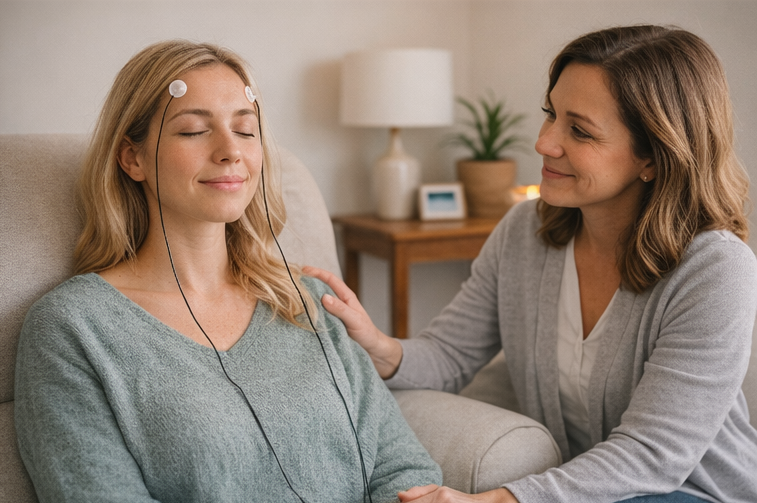
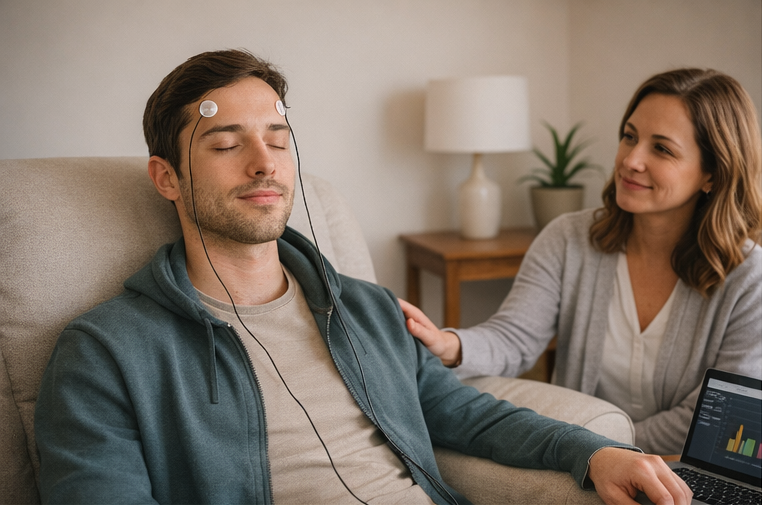
Neurofeedback is a type of biofeedback that measures brain activity (EEG) and gives real-time feedback—often through a movie or simple visuals—so your brain can practice more stable, regulated patterns. We don’t put anything into your brain, and we can’t read your thoughts. It’s simply a way for the brain to “see” how it’s functioning and learn to adjust.
Neurofeedback for Trauma Recovery
Trauma can leave the nervous system “stuck” in fight/flight/freeze—leading to anxiety, irritability, emotional swings, and sleep issues. Neurofeedback supports recovery by helping the brain practice regulation without needing to re-tell or re-live painful experiences. Many clients use neurofeedback on its own or alongside therapy to build stability and resilience.

Who Neurofeedback Can Help
SDTC neurofeedback is often a good fit for children, teens, and adults who are experiencing challenges such as:
Results Clients Commonly Report
Results vary by person, but many clients describe improvements such as the following:
Not sure if neurofeedback is right for you? We’re happy to talk through options.
Neurofeedback Benefits
Contact Us today to find out if Neurofeedback, a non-medication based treatment, is the treatment for you or someone in your family.
Results of Neurofeedback

Average Impact is a 40% Reduction of symptoms in 20 Sessions
Results Tracking System by the Neurofeedback Advocacy Project
My experience with neurofeedback is best described as a reintegration of my authentic self into my current experience. Training at San Diego therapy center, I have been able to work full time, graduate with my masters, and thrive through life stressors. Neurofeedback gave me a newfound clarity and sense of calm that I had never experienced. Throughout my experience, I took on EMDR and was able to successfully reprocess my past experiences. I do not believe that I would have been able to engage in EMDR without the healing properties of neurofeedback. In conjunction with EMDR, neurofeedback has helped my sleep, emotional regulation, focus and attention, in addition to eliminating panic attacks which I previously experienced multiple times a week. I am forever grateful for the neurofeedback training I received at San Diego Therapy center. I hope to continue to utilize this tool throughout my mental health journey.
~ Neurofeedback User
THERAPEUTIC APPLICATIONS FOR SAN DIEGO NEUROFEEDBACK
What a Session Looks Like
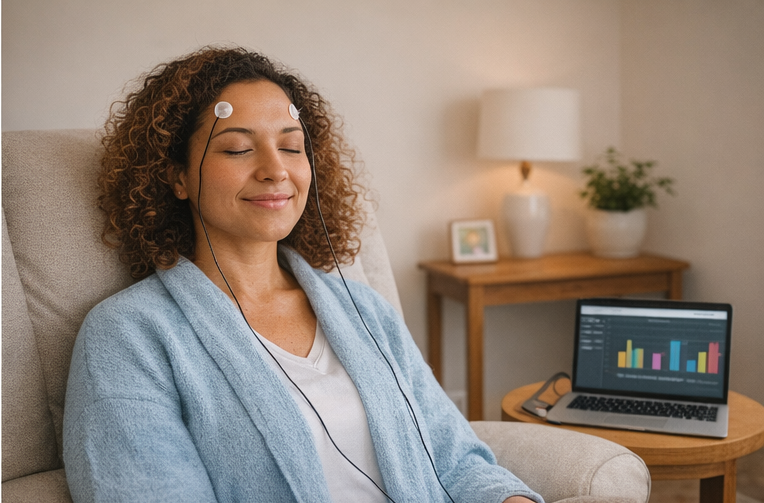
A typical neurofeedback session includes: sandiegotherapycenter.org
- Brief check-in on sleep, stress, and symptoms
- Comfortable sensor placement (electrodes read brain activity)
- Training while watching a movie or using feedback visuals
- Quick review of how you felt during and after
Follow-up sessions are typically 45 minutes and include about 30 minutes of training.

What will I feel?
Many clients feel calm, clear, and more focused after sessions. Some clients may feel tired or notice shifts in sleep as the brain adapts. If you ever feel uncomfortable (headache, irritability, grogginess), tell your provider—protocols can usually be adjusted quickly.
What makes SDTC different?
San Diego Therapy Center (SDTC) is unique due to our team approach to your care and our weekly clinical review process. SDTC uses a team-based model with weekly clinical review, so your care benefits from multiple trained perspectives—not just one provider. This helps us personalize protocols, monitor progress carefully, and offer sessions every day of the week.