
The Day My Brain Finally Felt Like Mine: One Patient’s Journey with Neurofeedback
The alarm went off at 6:47 a.m., and Marcus didn’t move.
Not because he was tired — though he was, bone-deep tired, the kind that doesn’t go away after sleep. He didn’t move because getting up meant starting another day inside a brain that felt like a stranger’s. A brain that raced at 3 a.m. with thoughts he couldn’t stop. A brain that blanked out in the middle of conversations. A brain that, no matter how hard he tried, he couldn’t seem to control.
Marcus was 34. From the outside, his life looked fine — a steady job in IT, a small apartment near the bay, a rescue dog named Pinto who needed walking. But inside, he was drowning.
He’d been diagnosed with ADHD at 31, anxiety shortly after. He’d tried two different medications. One made him feel flat, like someone had turned down the volume on everything — including the parts of himself he actually liked. The other helped him focus but left him grinding his teeth and staring at the ceiling until 2 a.m. He’d tried therapy, and while it helped him understand himself better, it didn’t touch the noise. The constant, relentless, electrical hum of a mind that simply would not settle.
“I just want to feel quiet,” he told his therapist one afternoon. “Not numb. Just… quiet.”
That was the day she mentioned neurofeedback.

“You Want to Put Sensors on My Head?”
Marcus will admit he was skeptical. When his therapist described neurofeedback — a technique that trains the brain using real-time feedback on its own electrical activity — he pictured something out of a science fiction film. Electrodes. Beeping machines. Someone reading his thoughts.
The reality was considerably less dramatic.
His first session at San Diego Therapy Center started with a conversation. His clinician, a soft-spoken woman named Elena, asked him not about his diagnoses, but about his days. What did a hard day feel like? What did a good one feel like? When did he feel most like himself?
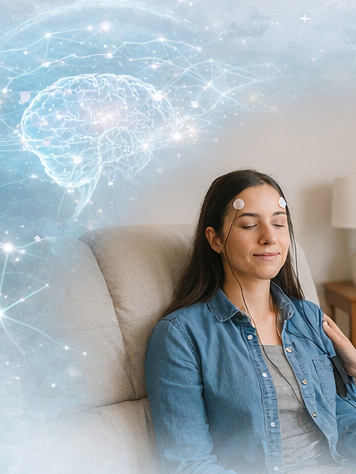
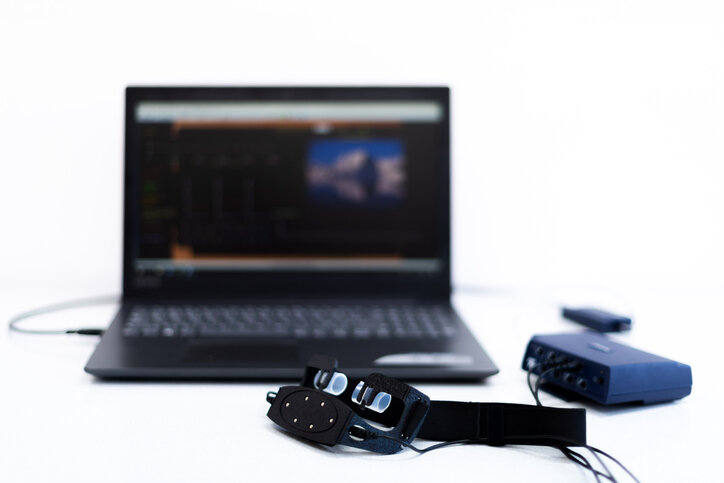
Then she placed a few small sensors on his scalp — no needles, no discomfort — and asked him to watch a screen. On it, a simple animation played: a landscape, a moving object. When his brain produced certain wave patterns associated with calm focus, the image moved smoothly. When it didn’t, the image slowed or dimmed.
His brain, it turned out, had its own feedback loop. And for the first time in his life, Marcus could see it.
“It was weird,” he said later. “Like suddenly having a mirror for something you’ve never been able to look at.”
What’s Actually Happening in the Brain
Here’s where the science comes in — but stay with the story, because it matters.
The human brain communicates through electrical impulses that create patterns of activity called brainwaves. Different states of mind — deep sleep, relaxed focus, anxious rumination, calm alertness — correspond to different brainwave frequencies. In people with ADHD and anxiety, these patterns are often dysregulated: too much high-frequency activity when the brain should be resting, too little of the focused, rhythmic activity associated with sustained attention.
Neurofeedback works by showing the brain its own activity in real time, then rewarding it — through the animation, a sound, or another signal — when it produces more optimal patterns. Over time, through repetition, the brain learns. It’s a process called operant conditioning, the same fundamental mechanism through which we learn any skill. Except in this case, the skill is regulation itself.
It’s not magic. It’s not instant. And it doesn’t work the same way for everyone. But for many people — people like Marcus — it offers something that medication alone often can’t: the experience of the brain changing itself.
Weeks Two Through Eight: The Slow Shift
Progress in neurofeedback rarely announces itself. It tends to arrive quietly, in the background, the way a season changes — you don’t notice it happening until one day you realize the air is different.
For Marcus, the first sign came around week three. He was in a meeting at work, the kind that usually sent his mind spiraling through seventeen unrelated thoughts simultaneously, and he noticed — with something close to shock — that he was simply listening. Not fighting to listen. Just listening.
He didn’t say anything about it to anyone. It felt too fragile, too new. Like a plant he didn’t want to jinx by talking about.
By week five, he was sleeping through the night more often than not. Not every night. But more.
By week seven, he called his mom on a Sunday afternoon — something he’d been meaning to do for months but kept putting off because phone calls required a kind of mental presence he rarely had. They talked for an hour. He remembered all of it.
“I kept waiting for the other shoe to drop,” he said. “For it to wear off. For me to wake up and be back in the fog. But it just… didn’t.”
The Thing Nobody Tells You
What surprised Marcus most wasn’t the focus, or the sleep, or the quieter mornings. It was something harder to name.
It was the sense that his brain was his again.
Not borrowed. Not managed. Not chemically overridden or white-knuckled into submission. His. Capable of learning, of adapting, of finding its own way toward balance.
“I always thought I was broken,” he said, sitting in Elena’s office after his final session, Pinto’s leash looped around his wrist. “Like there was something fundamentally wrong with my wiring. Neurofeedback didn’t fix me. It showed me I wasn’t broken. I just needed to learn how to work with my own brain instead of against it.”
What This Means — For Marcus, and Maybe For You
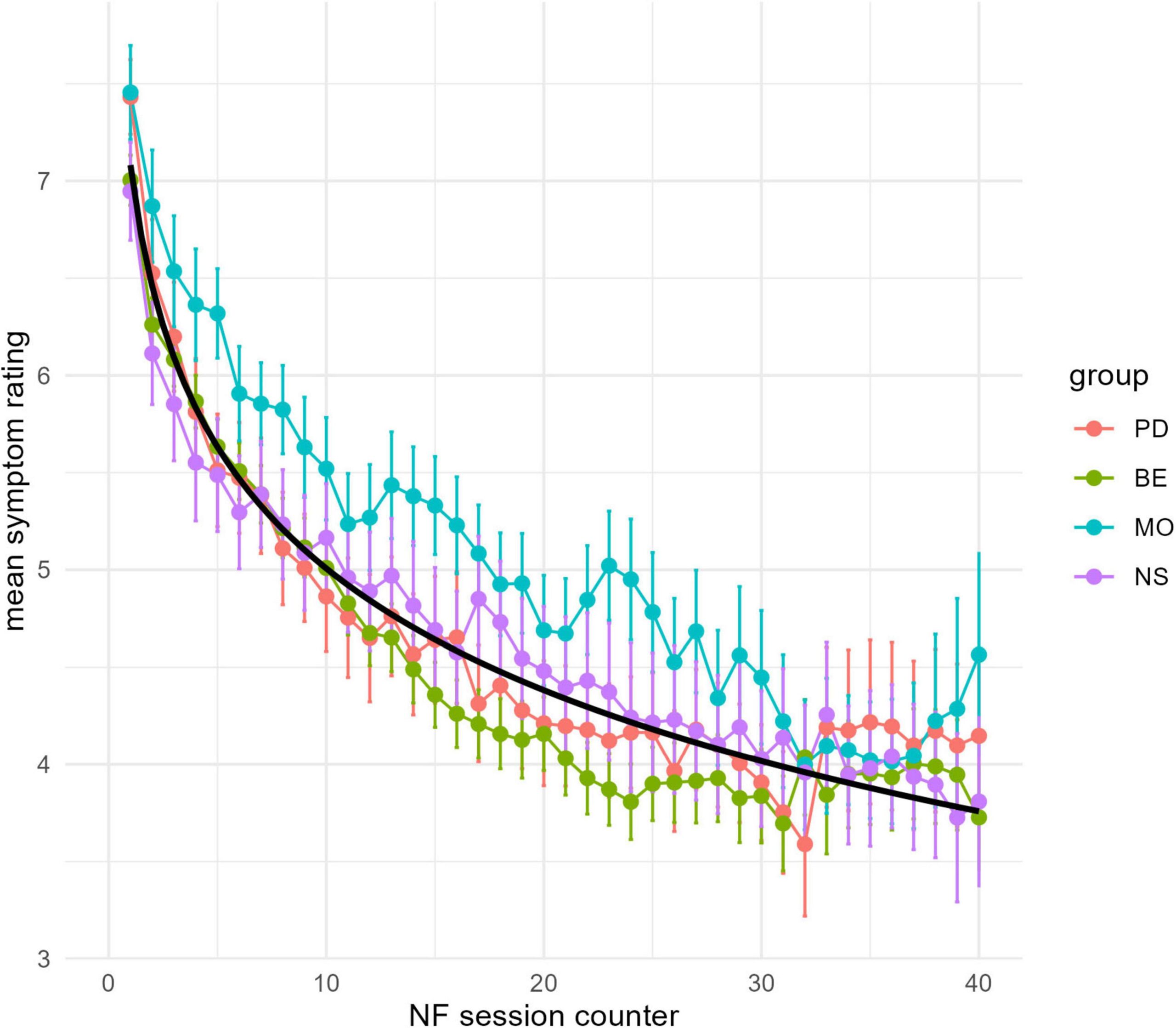
Marcus’s story is one story. Neurofeedback has been studied for decades across a range of conditions including ADHD, anxiety, PTSD, depression, autism, traumatic brain injury, and sleep disorders. Research continues to grow, and while it is not a replacement for all other treatments, the evidence for its effectiveness — particularly for attention and anxiety — is substantial and expanding.
At San Diego Therapy Center, neurofeedback is offered as part of a whole-person approach to mental health care. It’s available at no to low cost, with commercial insurance accepted — because we believe that access to innovative, effective care shouldn’t depend on your zip code or your bank account.
If you’ve tried other paths and found yourself still searching, if you’ve felt like a stranger in your own mind, if you’ve ever whispered I just want to feel quiet — neurofeedback might be worth exploring.
Your brain is not your enemy. With the right support, it can become your greatest ally.
Interested in learning more about neurofeedback at San Diego Therapy Center? Visit us at sandiegotherapycenter.org or call us at 619-289-7322. We’re here.
Stories like Marcus’s are only possible because of donors like you. Help us keep neurofeedback and mental health counseling accessible to everyone — donate today at sandiegotherapycenter.org.
Note: Marcus is a fictional composite patient to protect privacy and confidentiality, and created based on SDTC’s experiences to illustrate common neurofeedback experiences. Individual results vary. Please consult with a qualified clinician to determine whether neurofeedback is appropriate for your needs.