The Body Keeps the Score, But the Brain Can Learn New Music: One Woman’s Journey Through Trauma and Neurofeedback
Sofia didn’t tell anyone about the accident for almost two years.
Not because she was ashamed — though shame had a way of weaving itself into everything eventually. But because from the outside, she was fine. She had walked away. The other driver had a broken collarbone; Sofia had a bruised sternum and a mild concussion. The ER doctor cleared her in four hours. Her car was totaled. She got a new one.
She was fine.
Except that she couldn’t drive on the freeway anymore. Except that she woke up at 2 a.m. three or four nights a week, heart hammering, the squeal of tires still ringing in her ears even though the room was silent. Except that she sat through her niece’s birthday party last spring with her jaw clenched and her eyes fixed on the exit, a plastic cup of lemonade sweating in her hand, and couldn’t have told you afterward what flavor the cake was.
She was fine. She just wasn’t herself.
“I thought trauma was something that happened to other people,” Sofia said. “People who went through wars. People who lost children. Not someone like me, who had a car accident and walked away.”
This is one of the most common and most painful misconceptions about trauma. And it kept Sofia from getting help for longer than it should have.

The Thing About Trauma Nobody Explains
Sofia finally sought help at 38, two years after the accident, when she missed her best friend’s wedding rehearsal dinner because she couldn’t make herself get on the freeway and the surface streets added forty-five minutes she didn’t have, and she sat in her car in the parking garage and cried until her chest hurt.
Her therapist was gentle and skilled, and talk therapy helped — it gave Sofia language for what she was experiencing, a framework, a sense that she wasn’t losing her mind. But there was a ceiling. They could talk about the accident. They could identify the triggers. They could build coping strategies. And yet the 2 a.m. wake-ups persisted. The hypervigilance at social events persisted. The moment she merged onto a freeway — on the rare occasions she forced herself to — her hands gripped the wheel so hard her knuckles whitened, and her body flooded with a terror that no amount of rational self-talk could touch.
Her therapist suggested they add neurofeedback to her treatment.
“She explained it to me,” Sofia recalled, “and I remember thinking — you want to train my brain the way you’d train a muscle? And she said, basically, yes. And something about that made sense to me in a way that nothing else had.”
What Trauma Does to the Brain
To understand why neurofeedback can help with trauma, it helps to understand what trauma does to the brain in the first place.
When we experience a threatening event, the brain’s alarm system — centered in a small, almond-shaped structure called the amygdala — activates the fight-or-flight response. This is normal, healthy, and life-saving. The problem with trauma is that for some people, this alarm system gets stuck. It doesn’t reset after the threat has passed. Instead, it remains on high alert, scanning constantly for danger, triggering the same physiological stress response — racing heart, shallow breath, flooding adrenaline — in situations that are objectively safe.
This is not a weakness. It is not a choice. It is the brain doing exactly what it was designed to do — protect you — but doing it on a hair trigger that was set during a moment of genuine danger and never recalibrated.
Trauma also disrupts the brain’s default mode network, affecting memory consolidation, emotional regulation, and the ability to feel safe in one’s own body. This is why trauma survivors often describe feeling disconnected, hypervigilant, or emotionally flat — and why they can know, intellectually, that they are safe, while their nervous system insists otherwise.
Neurofeedback works by directly targeting these dysregulated brainwave patterns. By training the brain to produce more stable, regulated activity — particularly in the regions associated with emotional processing and threat detection — it helps the nervous system find its way back to a baseline it may not have experienced in years.
Session by Session
Sofia’s first neurofeedback session felt, she said, almost disappointingly ordinary.
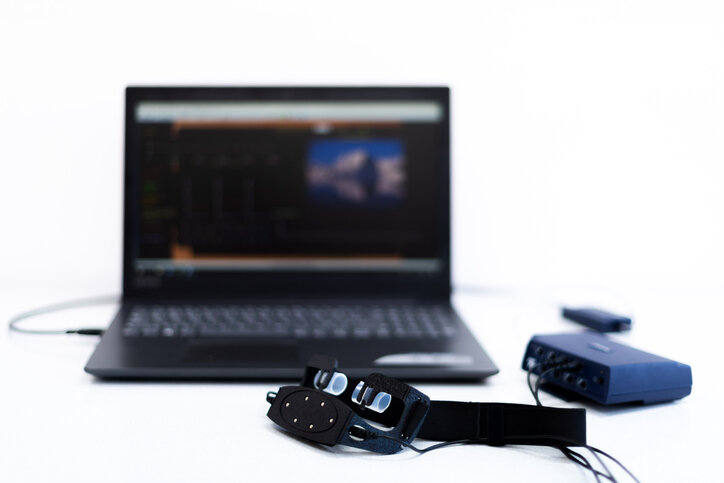
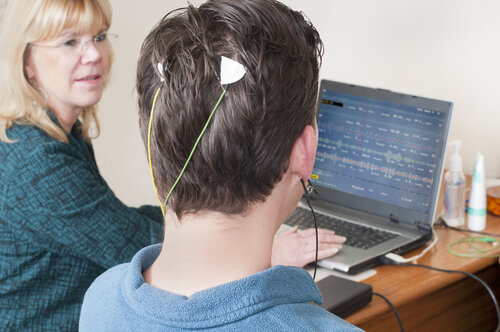
She’d imagined something more dramatic. More clinical. Instead, she sat in a comfortable chair across from a calm clinician named Priya, sensors placed lightly on her scalp, and watched a screen where a gentle seascape animation played. When her brain produced patterns associated with regulated calm, the waves moved peacefully. When it didn’t, they stilled.
“The first few sessions I kept waiting for something to happen,” she said. “Like a big moment. A breakthrough. But it was more like… accumulation. Like water slowly filling a basin.”
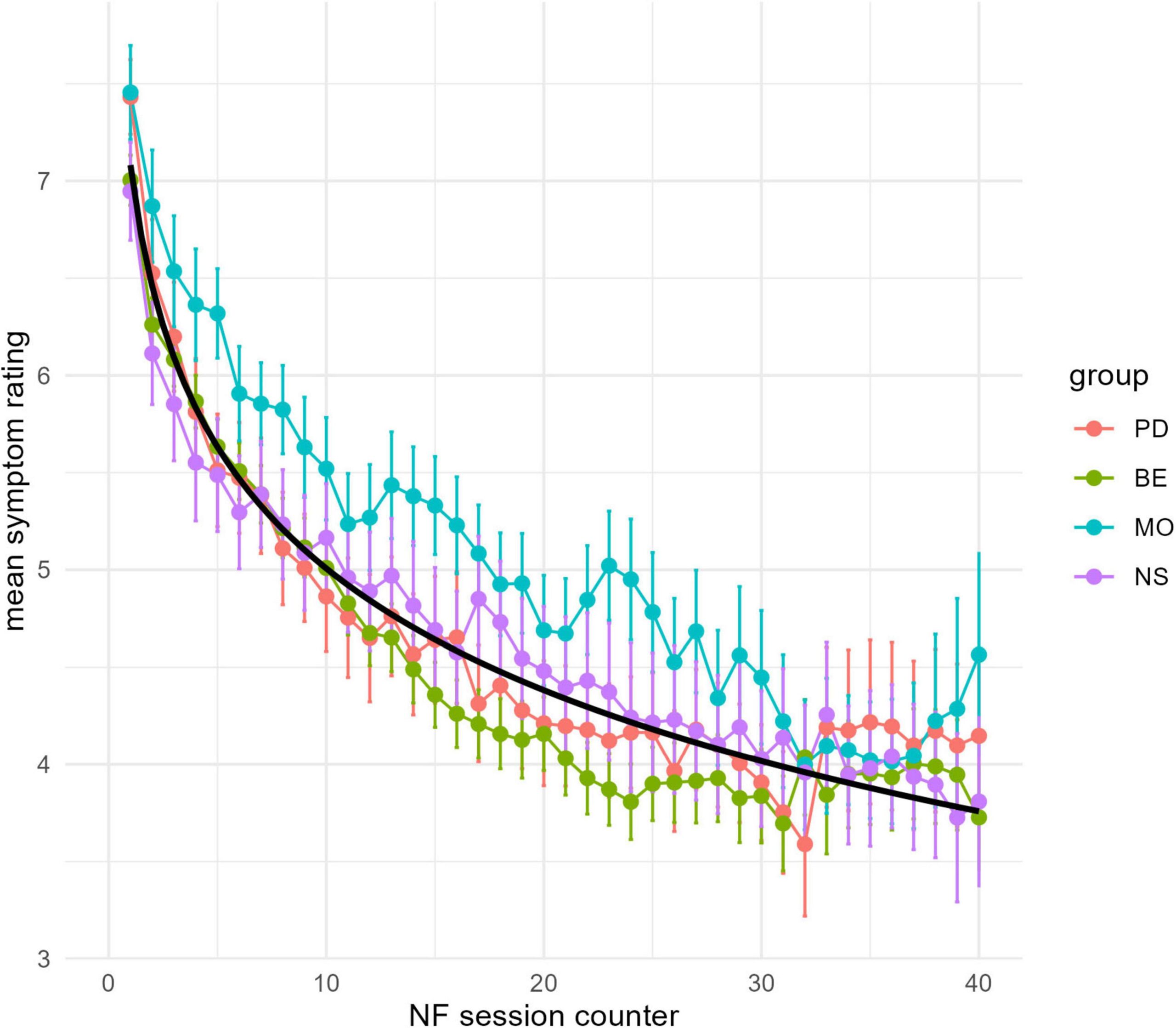
By session five, she noticed she was waking up at 2 a.m. less often. Not never — but less.
By session eight, she drove to her sister’s house in Chula Vista. On the freeway. She gripped the wheel, yes. Her heart rate climbed. But she made it. And when she pulled into the driveway, she sat for a moment and felt something she hadn’t felt in two years.
Pride.
By session twelve, her therapist noted that their talk therapy sessions had shifted. They were no longer circling the same ground. Sofia was processing, moving, integrating. The two treatments were working together — neurofeedback calming the nervous system enough that the cognitive and emotional work of therapy could actually take hold.
The 2 a.m. Moment That Changed Everything
Around week ten, Sofia woke at 2 a.m. — as she had hundreds of times before — to the phantom sound of tires and the slam of her heart.
But this time, something was different.
She lay still. She breathed. And instead of the usual spiral — the replaying, the scanning, the desperate bargaining with her own nervous system — she felt the fear arrive, peak, and then, slowly, recede. Like a wave that had finally found its shore.
She was still awake at 2:15. But she was calm.
She reached over and scratched her cat behind the ears. He purred. She fell back asleep.
“It sounds so small,” she said, telling the story. “But you have to understand — that moment felt like getting a piece of myself back that I’d given up on ever finding again.”
For the Women Who Think Their Trauma Isn’t “Bad Enough”
Sofia asked me, before I wrote this, to make sure I said something specific. So I’m saying it directly:
If you have been telling yourself that what happened to you wasn’t bad enough to count — that other people have it worse, that you should be over it by now, that you walked away and therefore you’re fine — please hear this:
Trauma is not measured by how dramatic it looks from the outside. It is measured by what it does to your nervous system. A car accident, a difficult birth, a relationship that eroded your sense of self, a childhood that was more chaotic than safe, a moment when you felt truly powerless — these things leave marks. Real ones. Neurological ones. And those marks deserve real care.
At San Diego Therapy Center, we work with women navigating trauma of all kinds — acute, complex, hidden, and named. Our neurofeedback program is one tool among many, including sex therapy and talk therapy offered alongside counseling in a space that is warm, nonjudgmental, and built around the belief that healing is possible for everyone.
We accept commercial insurance, and we offer no to low cost services — because the cost of care should never be the reason someone stays stuck.
You walked away. But you don’t have to keep walking alone.
Ready to take the next step? Visit us at sandiegotherapycenter.org or call us at 619-289-7322. We’re here when you’re ready.
Women Navigating Trauma
No one should stay stuck because they can’t afford to heal or can’t access quality treatment. Support San Diego Therapy Center’s mission to break barriers to mental health care — donate at sandiegotherapycenter.org.
Note: Sofia is a fictional composite character to protect confidentiality and created based on SDTC’s patient experiences to illustrate common experiences of trauma and neurofeedback treatment. Individual results vary. This post is not a substitute for professional clinical advice. Please consult with a qualified clinician to determine whether neurofeedback is appropriate for your needs.