Understanding Neurofeedback: A Complete Guide to Brain-Based Regulation and Healing
Neurofeedback is rapidly expanding as a powerful, neuroscience-driven approach to improving brain regulation, emotional resilience, and cognitive functioning. At San Diego Therapy Center, we use the Othmer Method of Infra-Low Frequency (ILF) Neurofeedback, along with advanced protocols such as Alpha-Theta training and QIK testing, to support clients across the lifespan.
This guide brings together foundational concepts, the science behind neurofeedback, how protocols are selected, and what clients can expect—based on comprehensive clinical training, education and experience.
What Is Neurofeedback? A Modern Evolution of Brain Training
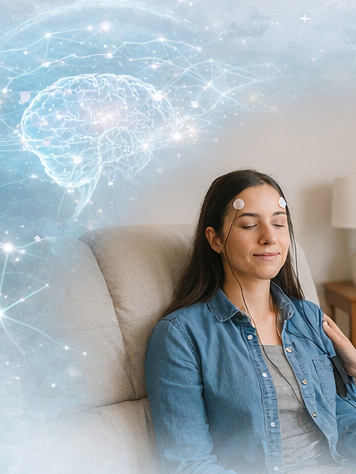
Neurofeedback is a form of biofeedback that measures the brain’s electrical activity (EEG) and provides real-time feedback to support healthier self-regulation. Through repeated sessions, the brain learns to stabilize, shift out of dysregulated states, and function more efficiently.
Neurofeedback treatment has been shaped by decades of research and clinical innovation:
1960s: The Foundational Discoveries
- Barry Sterman (UCLA) found that training cats to produce an SMR rhythm reduced seizure susceptibility—and later helped a patient with intractable epilepsy reduce seizures by ~60%.
- Joe Kamiya demonstrated that human beings can learn to intentionally influence their brainwave activity, opening the door to conscious regulation.
1970s–2000s: Expanding Into Clinical Practice
- Joel Lubar advanced early ADHD neurofeedback.
- QEEG databases allowed clinicians to compare brain patterns to normative samples.
- Over time, researchers refined methodologies and validated many early observations.
Today: Infra-Low Frequency (ILF) Training
ILF neurofeedback represents a major shift: instead of training traditional EEG bands or frequencies (alpha, theta, beta), ILF focuses on ultra-slow brain activity that appears to underlie foundational regulation, network timing, and brain-wide stability.
Brain Basics: What We’re Actually Measuring
To understand neurofeedback, you need a basic map of the brain’s electrical and functional systems.
Neurons & Glial Cells
Neurons communicate electrically and chemically, while glial cells regulate metabolism, immune function, and possibly even the ultra-slow oscillations targeted by ILF neurofeedback.
Traditional EEG Frequencies
- Delta (0.5–4 Hz) – deep sleep
- Theta (4–8 Hz) – creativity, pre-sleep
- Alpha (8–12 Hz) – relaxed wakefulness
- Beta (12–30 Hz) – active thinking
These reflect rapid neuronal firing patterns.
ILF (<0.1 Hz): A Different Phenomenon
Infralow Frequency (ILF) signals capture:
- slow cortical potentials
- metabolic processes
- glial activity
- deep network coordination
These frequencies unfold over seconds or even minutes and reflect foundational regulatory processes, not moment-to-moment thinking.
The Othmer Method: A Regulation-First Approach
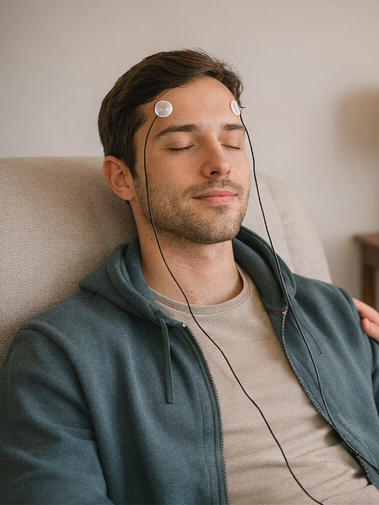
The Othmer Method, the most common approach to ILF Training, focuses on helping clients improve their nervous system regulation, not “correcting” a specific symptom or diagnosis. It is individualized, responsive, and built on careful moment-to-moment observation.
Why This Matters
Two people with ADHD may have opposite nervous system patterns—one highly activated, one deeply under-activated. Traditional frequency training often misses this distinction. Therefore, ILF training begins with the question:
“How is this person’s nervous system dysregulated today?”
The two key domains are:
- Arousal – The Gas Pedal
- High: anxious, tense, racing thoughts
- Low: sluggish, fatigued
- Unstable: energy swings, inconsistent functioning
- Excitability – The Shock Absorbers
- High: sensory sensitivity, emotional reactivity
- Low: numbness, rigidity
- Unstable: unpredictable responses
Therefore, your system’s responses drives the selection of neurofeedback sites and frequencies.
How We Choose Protocols: A Systematic, Observation-Based Process
Three Primary Starting Sites
- Calming
For anxiety, hyperarousal, racing thoughts, sensory overload. - Stabilizing
For mood swings, inconsistent sleep, unpredictable energy. - Balance
For clients who feel simultaneously “wired and tired.”
The Universal Starting Frequency: 0.0001 Hz
Everyone begins at the same frequency, then our clinicians adjust up or down based on:
- moment-to-moment feedback
- comfort level
- arousal changes
- sleep patterns (the most important long-term indicator)
Most of our clients ultimately settle at a lower frequency than the starting point.
Alpha-Theta Training: Deep Processing for Trauma & Integration
After regulatory stability is achieved through ILF training, some clients may move into Alpha-Theta work—a deeply relaxed, eyes-closed protocol that promotes emotional integration, memory processing, and creative insight.
Clinical Applications
- trauma and PTSD
- addiction
- creativity and performance enhancement
- emotional integration and personal growth
Why It Works
The brain oscillates between:
- Alpha (8–12 Hz): calm awareness
- Theta (4–8 Hz): dreamlike access to unconscious material
This “crossover” allows emotional content to emerge safely and be integrated without feeling overwhelmed.
QIK Testing: Objective Measurement of Attention Functioning
The QIK Test is a continuous performance test that evaluates:
- sustained attention
- impulse control
- response time consistency
This is especially useful for ADHD assessment and neurofeedback progress monitoring at the beginning of treatment and then throughout the treatment progress.
Research shows that ILF neurofeedback leads to measurable improvements across all QIK domains, including:
- fewer omission errors (attention)
- fewer commission errors (impulsivity)
- reduced variability (regulation)
The Clinical Compass: Sleep as the Primary Regulator
Sleep reveals more about regulation than any other single measure.
Improved Sleep
- easier sleep onset
- fewer nighttime awakenings
- deeper, more restorative sleep
Decreased Sleep Quality
- agitation
- longer sleep onset
- restlessness
Sleep quality as a clinical compass is why our clinicians assess sleep at every session.
What Clients Can Expect During Sessions
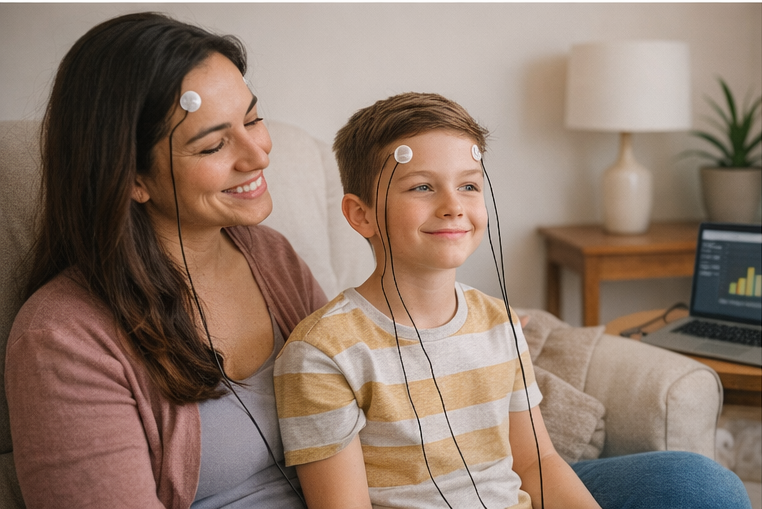
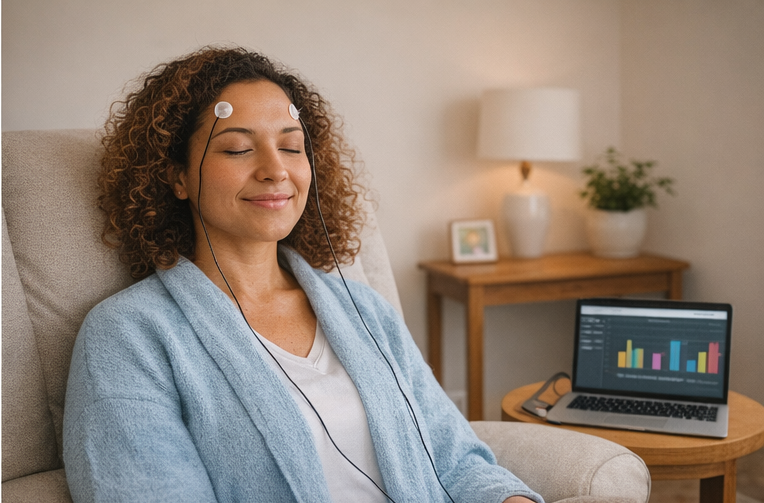
Neurofeedback is a gentle, non-invasive, learning-based process. Here at SDTC, Clients may notice:
- increased calmness
- improved sleep
- reduced anxiety or reactivity
- better focus
- greater emotional resilience
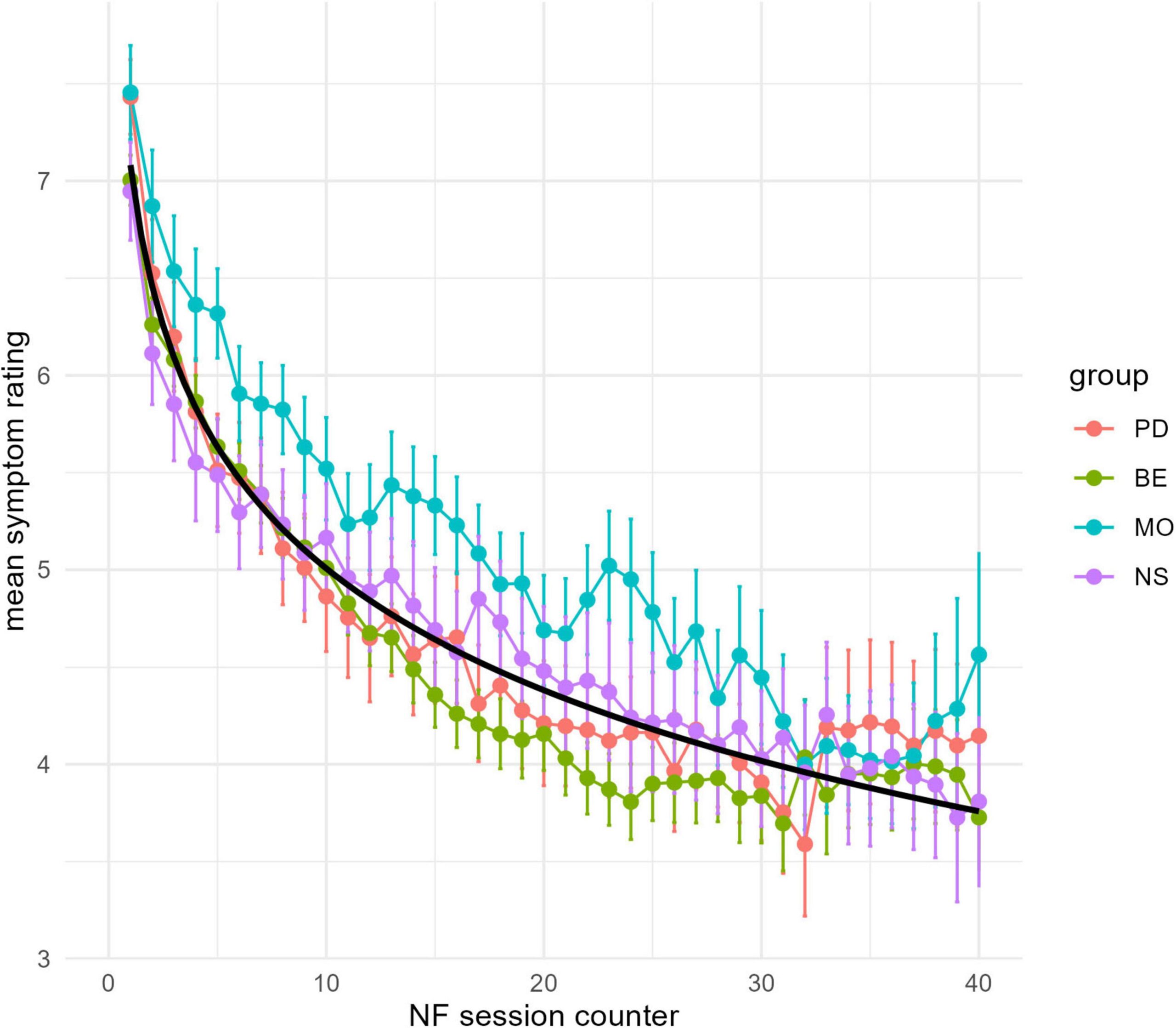
Each session builds on the last, supporting long-term improvements in self-regulation.
Why Neurofeedback Matters
Neurofeedback is not a quick fix—but it is a powerful, evidence-informed approach that helps the brain do what it’s designed to do: self-regulate.
Consequently, neurofeedback is especially valuable for:
- trauma survivors
- individuals with ADHD
- those with anxiety or mood dysregulation
- people seeking peak performance
- children and teens needing safe, non-medication support
Ultimately, Neurofeedback at SDTC combines rigorous neuroscience with compassionate clinical practice, offering a path toward stability, clarity, and healthier functioning.
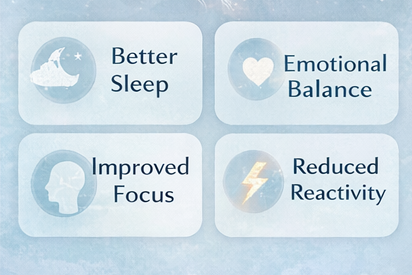
To summarize, this guide provides the foundations—but the real transformation happens in the therapy room, session by session, as clients rediscover their capacity for balance, calm, and resilience.